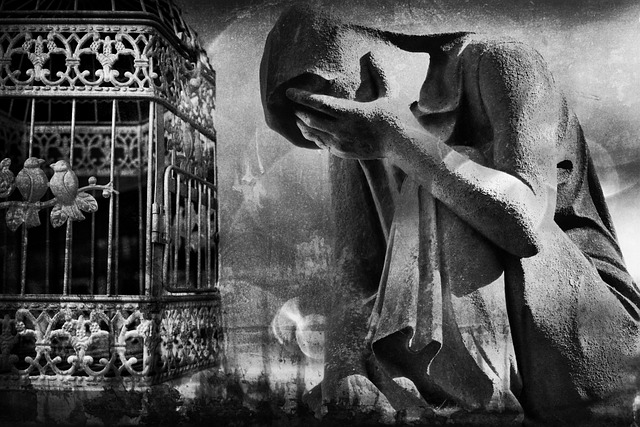
…We have not even to risk the adventure alone, for the heroes of all time have gone before us. The labyrinth is thoroughly known. We have only to follow the thread of the hero path, and we had thought to find abomination, we shall find a god. And where we had thought to slay another, we shall slay ourselves. Where we had thought to travel outwards, we will come to the center of our own existence. And where we had thought to be alone, we will be with the world
Joseph Campbell, The Power of Myth.
…As we age, we have a choice: we can become confined and controlled, leading to feelings of becoming old prematurely, or we can choose to be free and alive.
Sonna Aronaran, The Power of Never Giving Up.
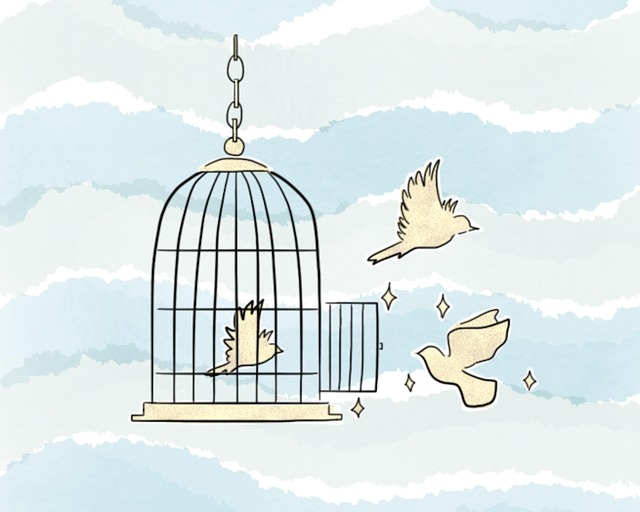
I’ve recently developed a deep interest in the parable of the bird flying free from its golden cage. For many of us, our addictions and dysfunctional behaviors become our comfort zones. This was my issue with the labels I accepted and wore as part of my identity at university—labels that define us to others and place us into specific groups. I embraced the neurodiversity label, proudly identifying with other vibrant, colourful students. “Hey, I’ve got ADHD and dyslexia, with a bit of autism thrown in; I wanna be in your gang.” And so, I became part of the gang. I may have even projected the image of being a bit of a Gary Glitter, trying to fit in with the younger neurodiverse crowd. However, I now realise that I created my own cage; this cage had layers—some I built by myself, while others were formed by experiences beyond my control.
We often settle into what we perceive as comfort and acceptance. Our traits, addictions, anger, and self-denial can stifle our human spirit. The fear of the unknown binds us, preventing us from discovering how it feels to be our true selves and to navigate our own journeys. Holding onto those labels and being part of constricting groups with rules and regulations about how we should behave creates the layers of the cage. We fly out, only to fly back in, not knowing what true freedom is.
Before university and my neurodiagnosis, I was very fortunate, having traveled and lived in beautiful, exotic places. I bought, redeveloped, and transformed homes and gardens. I even built a beautiful spiritual retreat center in the mountains of northern Thailand with the local indigenous Hill Tribe people. I consider myself a creative genius, yet I’ve never managed to stick with anything long enough to benefit from my hard work, often walking away and letting it all go to someone else. My initial plan was to form positive relationships, always aiming to build an oasis for a utopian new world where everyone could live happily ever after. Yet, none of it ever stuck; it all fell apart. Understanding my neurodiagnosis helped me realize why so many negative experiences happened in my past. But discovering why I sabotaged things only spiraled me into more trauma and severe dysfunction.
In the past few years, especially since my time at university and my neurodivergent diagnosis—I have struggled to create anything with roots that could grow into something tangible. I’ve drifted from one rented room to another, couch-surfing with friends. One friend even described me as a drifter, which didn’t sit well with me, but it has become true. I have been drifting since the day I realised I was neurodivergent, trying to figure out who this person really is.
I entered university at the grand age of fifty-seven with a clear purpose: to write a book about my five years in a Buddhist cult in Thailand. This is why I enrolled in a creative writing course, but that book never came to fruition. For it to happen, I needed someone to take an interest in my experience, my story, but no one ever did. You might see where this is going, am I looking for someone to blame? Was it the lecturers, the system? I believe the university system is flawed, and many lecturers exhibited strange behaviours I found difficult to appreciate, especially since I was borrowing a lot of money to help achieve my goal of writing my book. Looking back, it was a mix of that and my own choices that led me down intellectual tangents, fostering genuine curiosity about my newly discovered academic intelligence while trying to meet the obligations of the university system. Ironically, it was the system that eventually broke my passion for writing and learning. “Curiosity killed the cat”. that was another thing they always went on about the cliché, don’t use cliches, I have learnt now to say it how it is and if its someone else’s old worn-out words then so be it.
I should have abandoned the academic labyrinth in my first year once I grasped the university system, but I pressed on. That stubbornness is one of my negative traits of my neurodivergent mind, not knowing when to let go or say no. I even transferred from one university to another, still searching for that perfect place to write my story but only remaining in my cage and finding more control and regulation. This was the time of the pandemic, but you know what i don’t blame the pandemic. I never obtained the degree after completing four full years; I only came away with a £94,000 loan to repay.
But you know what? Time is a healer. Practice patience, understand the trauma and its roots, and you will find the answers you’ve been looking for. I’m in the process of a major overhaul of what my life has been about and correcting the issues I’ve just written about. This blog is about becoming a writer; the books will follow. I’m creating the time and space to do something different. Einstein’s famous quote, “Insanity is doing the same thing over and over again and expecting different results,” got me thinking about how I’ve been approaching things in the past. Did you know there is no evidence that Einstein ever wrote that quote? Apparently, it came from the A.A. and 12-step recovery programs. It makes more sense to me now; it’s all about discovering the truth about yourself and breaking free from that cage.


Leave a Reply