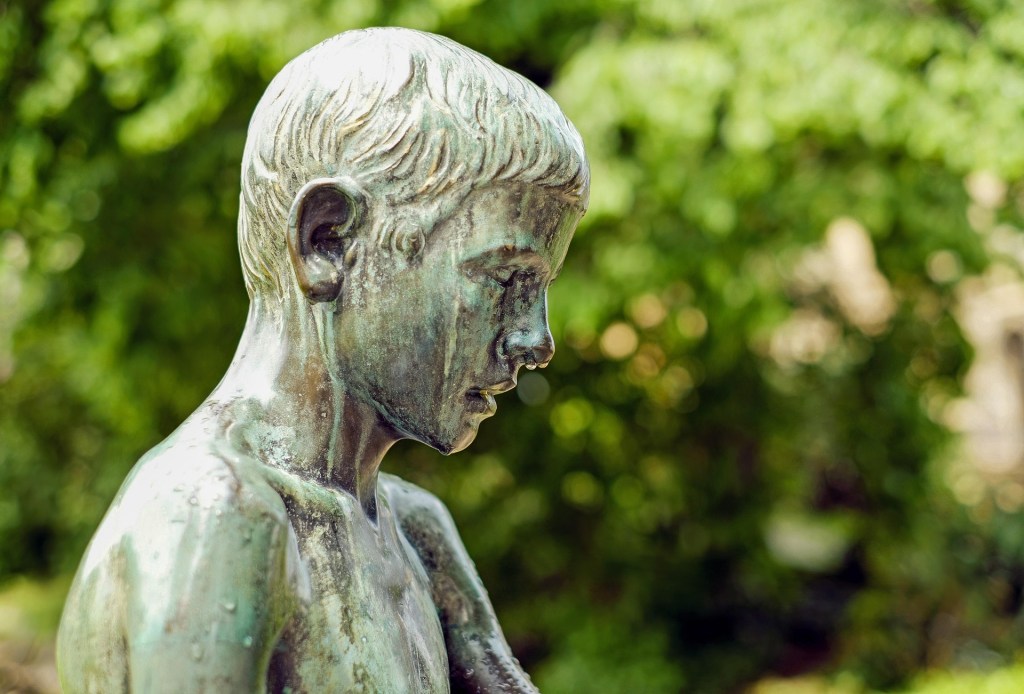
In stone a frozen mind.
When you’re writing a blog like this one—uncovering hidden secrets and finding the truth—it’s sensible to take your time. It isn’t necessary to post every week just to gain likes or followers. Writing this blog is a cathartic journey; there is pain and suffering to be dealt with. Anyway, that’s how I see it.
I’m sifting through brain matter from a long time ago, opening channels to the past and slowly putting the jigsaw pieces in place. The classic fable The Hare and the Tortoise—“Slow and steady wins the race”—serves as a psychological and cautionary warning. Being arrogant and overconfident, and thinking you have all the answers, can lead to self-sabotage.
Not that I’m in a race. This unfolding of my life has been more of a slow ramble I’ve been on for many years, although I’m starting to feel like I need to get into the race to reach an end result.
I’m opening up more with each post and digging deeper to share the story. Getting it onto the blog is very cathartic and refreshing. It’s making me feel good and healthy in the process. There is a slow release of negative, stagnant energy, allowing me to concentrate more. My mind seems calmer and more focused, as if I’m developing a true purpose.
This blog is a deep dive into the bottomless pit of death and grief: the long-term effects of losing people in my life, and how those losses have affected where I am now.
Confession
I don’t get emotional about death. A sombre thought might cloud my brain for a short time—maybe minutes, definitely not hours or days. I was affected by death on four occasions when I visibly cried and wept.
My first memory was losing my grandad at the age of nine. I think I loved my grandad because he was the male flesh and blood connected to my DNA. Maybe I bonded with him as a baby. He was a right old drunken bastard who smoked lots of Woodbine cigarettes.
There was something about him that made me love him in a strange way—an anxious attachment, like when a dog is totally committed to its owner with unrequited loyalty. They call it a Velcro dog. Maybe that was me: a Velcro baby, needing him out of a psychological need for safety. Whether he reciprocated that, I can’t remember.
My mum constantly fought with him—proper fist fights. Even though she hid a lot, she also shared some of the trauma, although I probably witnessed a lot of it. The fighting was over me and my existence: how I was made and what I was made from.
She told me she hated him and fought with him because he aggressively laid into her verbally. Daddy-O—she also called him Johnny Boy—would come home from the pub drunk, looking for the bitch to fight with. She would have to wrap me up and take me to safety at the neighbours’ house or to my aunties in the next street.
When she told me these stories, she always followed them with, “The fight was with me and Daddy-O. He never laid a finger on you.”
After she married my stepdad, they tried to introduce my stepfather’s parents as my new Nan and Grandad, but that didn’t work out. She was honest about it and said, “I stopped taking you down there to see them. You weren’t accepted. We couldn’t gel.”
I knew the new Grandad wasn’t Daddy-O, and she wasn’t my Nan. So I must have loved Daddy-O.
The sad thing was that after he died, my Nan went off to work at Butlins in Wales, enjoying her newfound freedom. So both of them were gone, and I had also lost my sanctuary: their house at 28 Mill Lane. That place, which I had seen as home, was empty. I had nowhere to retreat to.
When my Nan died, I was working as a timeshare tout in Portugal. I was upset, got drunk and cried, but I didn’t return for her funeral. She was my closest ally and saviour throughout my childhood. If anyone should have been at her funeral, it was me.
I had just turned thirty, and my life was starting to get messy. I deeply regret not going and saying my goodbyes.
The Third Big Loss
The third big loss I experienced was my stepdad, although I’m not entirely sure about the emotional connection I had with him. He died just as I was beginning a life-changing journey in India. I was nine days into the journey, up in the north of the country, preparing to go into a ten-day Buddhist silent retreat.
I received the phone call while excitedly posting Christmas cards and gifts in a very chaotic Bodh Gaya post office. It was a strange situation, and it led to me taking a five-day journey home. I arrived back the day before the funeral.
Everyone else had already had time to adjust and accept what had happened, while I was in some kind of jet-lagged daze, exhausted from travelling alone for five days. I was also beginning to sense that my life-changing spiritual adventure was over. My new role was to become my mum’s carer.
Looking back, there was no room for grief. I simply had to accept my new life, realising I was back at the beginning of where I had started.
Then there was the big one: my mum died.
After four years of living my life for someone else, battling to create a balance between living the life I wanted and giving my mum the life she wanted, everything collapsed. During those four years, trying to cope with the pressure and stress of my mum’s final year and terminal illness, loss and grief had become a form of survival mode.
My brain and body were running on empty. Everything was collapsing around me, even the house we were living in, which was under threat of repossession. When my mum passed away, it felt like a release, and I went into a defensive, protective state just to keep functioning.
There was no time or place for grief. I was driven by the need to move on, move away and get my life back.
There were no crocodile tears in the four deaths. The grief was real, but survival mode always took over. Four months later, I moved permanently to Thailand.
Grief makes you do strange things. You don’t realise you’re blocking it out, and you don’t feel how it is affecting you, but it keeps working quietly behind the scenes, chipping away at your sense of self and identity. I feel as though I’ve been adding a complicated-grief certificate to all the other emotional-trauma certificates locked away in the forbidden cupboard.
Opening the Forbidden Cupboard
It’s taken a long time. I’m now in my mid-sixties, still roaming and drifting from one place to another, trying to find somewhere to settle down.
Last year, in 2025, I made it my focus to find the answers. I embarked on a journey of self-discovery, determined to find my true identity. While on a strange pilgrimage in the north of India, a key finally turned up, and I managed to get into that forbidden cupboard.
Allowing myself to find out more about my early childhood, I realised that I had suffered a major grief between the ages of three and four, when I lost my biological dad. He didn’t actually die, but in a sense he was taken away from me, extinguished from my life.
That is why I have no memory of him: he was erased. At that early age, there must have been a deep grief connected to that loss.
There is one memory that lights up like a flashbulb, creating a kind of dissociative stun-gun effect.
I remember sitting in my nan’s parlour on the settee with my mum. I can feel the material of the settee and see its design. My mum looked into my eyes and told me I had to forget my dad. We weren’t to talk about him any more, and we wouldn’t be seeing him again because he had gone away. He had been given a nine-month prison sentence.
He became “Father No Name”. He was gone and never coming back. My mum said we wouldn’t talk about him any more because I had a new dad, who was obviously my new stepdad.
There are no visual memories of meeting my stepdad when he and my mum were courting or after they got married. I don’t even remember their wedding. My mum told me about the wedding day many times. I have photographs, but there is no personal memory or emotional connection to what was happening back then.
I have started to wonder whether “Father No Name” was around me during those early years. Did I have a connection with him? Was there a bond? He had another family—a proper wife—and my mum was the other woman. Apparently, I have two half-siblings, all of us born within a two-year period.
It is a question that keeps nagging at me: had we bonded? Was I his special one? Why was I taken away from him? Even if he had another family, why couldn’t he come and see me?
Father No Name
In my search, I have come across a potentially sinister explanation. When I was in my mid-forties, I developed a strong desire to find out more about my “Father No Name”.
I had a good mate whose mum’s friend knew Father No Name’s sister—my auntie—and put me in touch with her. She confirmed that he was my dad and explained what had gone on back then, although I can’t remember much about those conversations. Once again, the pain of what happened seemed to block them out.
I do remember the conversations with my mate’s mum’s friend. She talked about Father No Name being involved with the IRA around the time I was conceived. She said he had been involved in raising funds for the IRA and had dealings with some dodgy Liverpool gangsters in the process.
Of course, at the moment, this is all speculation until I can discover the truth.
Back then, the IRA had been unsuccessful in its Border Campaign, which ran from 1956 to 1962. The sectarian divide in Liverpool was immense and a fierce source of conflict between the Catholic and Protestant communities.
My primary school, Broad Green, was Protestant, and we would often go and fight with St Oswald’s Catholic primary school. Even from the age of five to seven, we were involved in the religious war. Liverpool was sometimes described as “the Belfast of England”.
The IRA’s main concern at the time would have been maintaining secrecy from the British Special Branch. I don’t know whether my mum’s family had any connections to the Special Branch, but I do know what she told me on a number of occasions.
After I was born, she took Father No Name to court for financial assistance. This was known at the time as an Affiliation Order, relating to child maintenance.
That would have raised more than one red flag, exposing Father No Name’s private life in an open court and drawing everyone’s attention to my existence. When my mum went to court, she held me in her arms—I was only a month old or so—and Father No Name’s wife turned up with his two other babies.
Can you imagine the picture, and the gossip and scandal it created in the small, mixed-religious community of Old Swan?
What makes this so painful to write about is what my mum told me about the outcome and the response of the judge, or the panel, to her desperate plea for financial assistance.
The judge, or one of the panel, allegedly said that they could all see very clearly who the whore and prostitute was in the case, referring to my mother.
She was shamed out of court while holding me.
The stigma back then was immense. The pressure from wagging tongues, pointing fingers and the spotlight on both families would have had to be dealt with by higher powers within the IRA, not to mention the hostility between Catholic and Protestant families.
And who would be responsible for carrying away the big bags of foul-smelling, shameful guilt?
My mum and me.
The stench would have been sickening.
This links to another Pandora’s box. When I was a couple of months old—perhaps three or four months—my mum had to put me in a day nursery because she had to return to work to support us. There was no one else to look after me, so she had no choice but to put me in the nursery.
I was dropped off at 7 a.m. and picked up at 5 p.m., Monday to Friday.
Was this the reason Father No Name was taken away from me and banned from seeing me? Did he break that ban and secretly visit me?
Auntie Edie
As I was writing this blog, I remembered that I had lost someone else at a very young age. Another person had seemed to disappear from my life: my Auntie Edie.
Auntie Edie was someone very special during my early years. She used to look after me when I wasn’t at the nursery. Interestingly, I have definite, fond and happy memories of being with her when I was about three or four.
Back in those days, families lived close together. My grandad’s sisters, Edie and Molly, lived on Maddocks Street. Auntie Molly lived directly behind my grandad’s house, which was where my mum would run to escape Daddy-O’s fury. Auntie Edie lived at the bottom of the street, in a grand Victorian house.
The house had steps leading up to an ornate, arched, pillared front door. It wasn’t posh—it was quite run-down—but it made a lasting impression on me.
Auntie Eadie was a big woman who wore floral frocks and hairnets, and she had bunions on her feet. She taught me how to cut wood with an axe for the fire and how to light the big kitchen range, where she also cooked our meals. When there was no coal, she would burn her old shoes and handbags.
She told me stories while sitting and looking into the fire, teaching me how to read the flames.
As I searched my soul more intensely, I began to realise that Auntie Edie was a very important part of the puzzle—a major jigsaw piece. What she was teaching me was a form of “scrying the hearth”.
It began with preparing the wood, cutting it with an axe into kindling, and cleaning the old ash from the hearth so the air could flow. Then we would scrunch the newspaper tightly, twisting it like Lidl’s cheese twists, before placing the kindling in a lattice pattern on top of the paper.
Even the coal was arranged in a certain way so it would catch fire easily.
When the flames had settled, you could look deep into their geometry. Colours and shapes began to form, and the storytelling would begin.
I’m not entirely sure whether this is a wild, distant memory, but I think Auntie Eadie may have read tea leaves as well. Both practices were traditions associated with Irish women as forms of divination. The hearth was the spiritual heart of the Irish home—a portal where the domestic world met the ancestral and supernatural realms.
This memory has become very important to me. Recently, I have been wondering where my spiritual side comes from. I had always discounted my mum’s family, seeing them as spiritually barren, and looked instead to my biological father’s side for a connection.
I didn’t know then that my mum’s family was Irish—another family secret.
Hidden in the cupboard was Auntie Edie.
I imagine the stories she might have shared with me about our Irish and Welsh connections. Perhaps she even talked to me about my biological dad. Is that why she, too, disappeared from my life? Was I discouraged from going to Auntie Edie’s because she was “filling my head” with stories?
I can hear my mum saying, “Don’t be filling his head with those things. It’s not good for him.”
Through this writing, I feel as though I’m opening many closed doors, entering those forbidden cupboards and discovering the truth about the past.
Shoulda, Coulda, Woulda
Lots of loss and grief—strange grief that was locked away in that cupboard.
What would have been possible if I had known then what I know now?
Shoulda looked into this a long time ago.
Coulda been settled and secure.
Woulda stopped a whole lot of pain and suffering.
And always remember, folks: this is being written by someone with dyslexia, ADHD, dyspraxia and slight autism. That’s why it may read a bit weird, and why it takes me a long time to write.


Leave a Reply