As the Seed Fall Moon rises, the final harvest is here. The seeds for next spring are planted; now it’s time to come inside and write the Lore.
In July 2025, I stripped away my modern comforts and went in search of my true self. It became a real soul-searching adventure—a journey to discover my true identity.
It took me a year to get there. I uncovered layers of family secrets and, along the way, became a nomad, living and working with Buddhafield, an organisation that creates meditation retreats and festivals around Devon and Somerset. It was a real adventure: trusting the universe to protect and support me, and allowing myself to let go of past negative experiences.
On New Year’s Eve, I boarded a plane to Delhi and travelled north, into the Himalayas, with the intention to sort out my relationship with Buddhism. While staying at Root Institute, a Buddhist meditation retreat centre in Bodh-Gaya, I found some answers. Then I began tracing my absent father’s family and discovering who they were.
Putting together a family tree helped me form a spiritual connection with my absent father and accept him into my life. As I discovered my distant ancestral family, I also found my Celtic Irish roots. The transition from Buddhism to embracing my Celtic identity was profound and enlightening.
I took some time out and headed to South Goa for a month, hoping to absorb this newly discovered family history and make sense of what it meant to me. Finding a whole new family is a powerful experience, and one that needs time to digest.
When I returned to Devon, I took the DNA test I’d been waiting to do and discovered even more about my identity. The results showed that I’m 77% Celtic, with Irish, Welsh, Scottish and Breton ancestry.
I carried on as a nomad, but this time on my own, trying to work out where I was heading in life and looking for somewhere to settle. My mother’s and father’s roots are in Ireland, so you might think I’d have set sail there. But no—the pull brought me to Wales, to Haverfordwest, a place where I want to settle.
There’s a book of the lore to be written over the winter, and I’m on a tight schedule to have it finished by next spring. Through my research, I’ve found many links that help explain why I chose Haverfordwest. Now that I’m here, I feel comfortable and healthy, physically, mentally and spiritually.
I’m looking for a quiet sanctuary to share with a like-minded person or people, where I can get the lore written.
There are so many people being diagnosed with some sort of neurodivergent brain difference at the moment, especially when it comes to ADHD. Obviously, coping with life is very difficult when we are trying to weave our way through a technological revolution and global crises that may end the world as we know it.
A new world is being born at the same time as the old one is dying.
NHS statistics show that the peak age group being diagnosed is between 25 and 45, with a waiting list of over 700,000. The generation I come from had no such help or understanding of the neurodivergent brain. We suffered, and many still suffer, because of the blind ignorance of the past.
It is fantastic that, as an older generation, we can now have an explanation and understand why we led such messed-up lives — and, in many cases, why we still do.
This piece of writing is a good example of how neurodiversity can interfere with your writing process and make you fixate on something else. As I mentioned before, and will probably mention again, I didn’t really go to school and left with very few, low-scoring qualifications.
But there is an academic, intellectual brain inside my head. It has been proven.
This piece of writing was selected for the university blog. I rose above all my younger peers, many of whom had A levels and more, to become the creative genius of that year. But after that, it all stopped. It went away. I couldn’t go with the flow. I started swimming back upstream, as usual, escaping my chance of success. I changed my name in 2022.
The Simple Days of Chai and Plum Cake
Categories:
Student stories
by Oszey Calland.
Oszey is a first year Creative Writing student at the University of Gloucestershire. He has travelled extensively and writes about a wide variety of subjects.
The Simple Days of Chai and Plum Cake
Mr Ramesh stepped out of the little shop into the intense heat, looking up at the bright blue sky. “Fort Cochin is getting hotter every year,” he thought. “The monsoons will come soon bringing cooling rains. The Indian Monsoon always comes first to Kerela. Kerela: God’s blessed land.”
Taking his eyes away from the sky he looked to the corner of the street. Mrs Patel from the next shop was sweeping the ground with ferocious swings of her broom.
“Mrs Patel, you have so much energy in that sweeping, obviously your energy is not being used in serving customers?”
“What customers? Low season is here again, Ramesh. What should we expect at this time of the year?” Mrs Patel looked around, the street was empty. “No, Ramesh my brushing is getting rid of my anger and frustration,” she said in a hushed voice, once again looking for any on-comers who might interrupt the conversation.
“Why, is your anger and frustration creating this mad brushing?.”
“It’s Sanchi, he… he…” She looked around again. “I caught him on those titty sites again. That bloody phone. I told Mr Patel it was a bad idea.” Mrs Patel’s voice became more intense. “Those bloody phones, nothing but trouble, and that bloody computer is no better, always asking me, ‘do I want cookies?’. Look at the size of me, Ramesh. Do I look as though I need more cookies?”
“You have a fine figure, Mrs Patel, just as your mother and my mother had.”
“Oh! The old days Ramesh, why can’t it be like back then?” Not taking a breath she ranted on in a hushed voice. “He said he would stop looking at them, those titties on the phone. If we take him to McDonald’s at the new Lulu shopping mall. Have you been to Lulu mall yet Ramesh? You know, they say you can order what you want before you go and collect it, without seeing it. How can you buy something you have not seen, Ramesh?” Mrs Patel’s eyes were becoming larger, looking as though they were going to pop out of her head. She explained more. “It is the gateway to the new world, and a very expensive world, Ramesh.”
“This is the issue, Mrs Patel.” Raising the palms of his hands to the sky, Mr Ramesh joined in the rant. “The young ones want everything now. They’re not interested in the quality of what they want, it just has to be the right brand. Having to bargain with them all the time is harder work than the customer.”
“Well that’s when we get the customer,” replied Mrs Patel.
“Oh! Look, Mrs Patel, you have customers looking in your window.”
“Miracles may happen!” Mrs Patel voiced over her shoulder as she and the broom made their way to her shop. Following the two young people making their way through the doorway.
Feeling the heat and sweat starting to run down his back, Mr Ramesh made his way to the coolness of his own shop. As he stepped into the doorway the call of the chai man caught his ears.
“CHAI, CHAI!”
Spinning around he put his hand out. The chai man’s bike came to a halt.
“CHAI, CHAI!”
The waft of cinnamon and spices from the hot milk made him feel hungry.
“Yes, please and a piece of your delicious plum cake.”
He and the chai man exchanged conversation on how hot it was and made a wish that the rain would come soon. His shirt was feeling damp and starting to cling to him. He politely said goodbye to the chai man, letting him ride off in search of his next customer.
The coolness of the shop was a blessing. He sat down with his chai and plum cake. The chai and plum cake man had been around for as long as he could remember. His thoughts went back to the conversation with Mrs Patel. “The area was changing, a place that had not changed as long back as he could remember. But times were changing, people were definitely changing.” He started to think of the new fast style food places that were opening in the area. “Bread World, bloody Bread world what type of place was this.Offering western-style-bread, cakes and pizzas, sausage rolls and burgers. Not healthy food, it’s all done in a microwave. All cooked in two minutes.” His mother would turn in her grave if he ate that food. He captured visions of his mother from his memory. Picturing her, spending most of her day preparing the ingredients. He could smell the Masala in the memory. The sound of clanking frying pans, hot oil spitting and the aroma of spices would fill the air. The hours she would spend preparing the curry, marinating meat, adding spices through the cooking process. And then the chapatis and naan-bread tossing in the hot oil. What would she think of microwave samosa? She would be spinning like a firecracker.
He looked around his shop at the shelves filled with cashmere shawls and cloths. The beautiful bright colours, pinks, reds, greens. So many shades. He picked up a shawl and put it to his cheek, feeling the softness and smiling. His thoughts rolled on, his smile slowly disappearing. “This shopping on the internet so easy. Just put it in your basket, press the button and pay. No talking. No exchanging the story of the cashmere. No time, just buy, hurry, hurry, other things to do. People don’t have time for the story any more. The story of how the cashmere got to my little shop. Do they want to know about the journey I took once a year to get the cashmere? 3500 miles to Kashmir, three days on the train.I could have just gone to buy it from Deli, but you would not get the good deal and also having to pay the middle man would cut into the profits.”
That journey, the people the food and all types of animals, goats, chickens and ducks, all packed in with the people. Every colour God created in the saris worn by women who would create little homes on the train, tending to their family’s needs. The journey would take him from one end of India to the other. From the lush greenness of Kerala to the hot middle of India, to the cool mountains and lakes of Kashmir. Oh! What a journey, what wonderful memories.
And the people he would meet on the way. The conversations. Sharing good food, proper food from each region. Biryani from Hyderabad, the light sweet curries of Gujarat, the thick creamy curries of the north. Everyone would sleep huddled together in any space they could find. The friends he would make. His smile faded.
“And now the press of the button is taking it all away. On the train now, there is no conversation, just people looking at the phone, what is happening to my beloved country? Maybe soon we will be able to make a baby with the phone, no need for touching, loving, caring. Just press the button and it will arrive a few days later, and no need to come to Fort Cochin for your holidays any more. Get one of those bloody head things and go anywhere in the world while sitting on the toilet.”
“What is this world coming to?” he shouts out loud to the shawl, kissing it. Rolling the shawl around his hands. The cashmere felt soft warm and comforting. “Can the computer tell you about the goats this wool came from? Has the computer met the goats?” He kisses the shawl and presses it to his cheek. “And the work that goes into these little prayer rugs.”
He loved to show the customer the detail. They were once his best sellers as they could be packed easily into a suitcase.
***
The two young backpackers filled the door-way. “Hi! Can we have a look around?” the young girl bellowed in a high-pitched American voice, the young man following. “Hi!”
“Oh yes please do, welcome, welcome to my little shop, is there anything in particular you are looking for?” His sale patter kicked in. “I have a special end-of-season offer on these exquisite little rugs. Very easy to take home with you. Are you from America?”
“Yes, we’re from California,” the young girl replied.
“California, I have many customers that come from California, they always take a rug home. They fit so easy into the backpack.” Mr Patel was feeling good now. The actor is on stage, his sales spiel flowing. The sound of drums and air guitar filled the air. The young girl looked at her phone.
“Nicky is in the Coffee Lounge, we should go. Thank you we have to go and meet a friend.”
“Let me just show these beautiful cashmere shawls I have them in many colours.”
“I am sorry we really have to go, our friend is waiting.”
“Can your friend not have a coffee while she’s waiting?”
“We’re really sorry we really have to go.” She pushed the young man to the door. “We were only browsing any way.”
“Thanks for your time, we will try and come back tomorrow,” the young man replied in an apologetic tone as he was pushed out the doorway.
“Oh yes please do and bring your friend. I have many lovely things for you ladies and young gentlemen.” He stood alone in the shop again, holding the little rug.
“Just browsing, always browsing. And now they will go and browse the internet to remind them of the little rugs. Order it from Amazon, in the basket: click, click and it’s done.”
Sitting down, he looked around at the shelves of brightly coloured garments thinking of what the future was coming to.
He did not hear the light footsteps enter the shop behind him. He jumped from his state of daydream, feeling the hand move through his hair.
“My beautiful husband you are in dream land again.” He captured the heavy scent of his wife’s perfume. Turning, he looked at her, in her slender high heels and tight fitting western style suit.
“Oh, my beautiful wife you are like the first rains of the monsoon.” He softly stroked the arm of her suit. “Cashmere?”
“Yes darling, from Italy. You like it?” She lightly kissed him on the lips. “And how has your day been?”
“Oh, normal.”
“Yes, normal, just sitting around here waiting for someone to walk through the door.”
He opened his mouth to give a defensive reply. The words disappeared in to the fragrant air. She filled the gap with soft compassion.
“This shop is so old and dusty. You have everything so crammed on these shelves. How old is this stock? I think it’s been here for so many years it’ll be starting to disintegrate. Have you checked for mice?”
He looked at his wife with no words of defence.
“We open the new floor on the store tomorrow and I am signing the contract with Apple. Why don’t you come and work with me?” Her voice became enthusiastic while looking into his eyes.
“You are very good at selling. I think your talents are wasted here. I can get the web design department to create you an online shop, it can be your hobby.” He kissed her on the cheek.
He kissed her on the cheek. “My beautiful darling wife I think you are right.”
When you’re writing a blog like this one—uncovering hidden secrets and finding the truth—it’s sensible to take your time. It isn’t necessary to post every week just to gain likes or followers. Writing this blog is a cathartic journey; there is pain and suffering to be dealt with. Anyway, that’s how I see it.
I’m sifting through brain matter from a long time ago, opening channels to the past and slowly putting the jigsaw pieces in place. The classic fable The Hare and the Tortoise—“Slow and steady wins the race”—serves as a psychological and cautionary warning. Being arrogant and overconfident, and thinking you have all the answers, can lead to self-sabotage.
Not that I’m in a race. This unfolding of my life has been more of a slow ramble I’ve been on for many years, although I’m starting to feel like I need to get into the race to reach an end result.
I’m opening up more with each post and digging deeper to share the story. Getting it onto the blog is very cathartic and refreshing. It’s making me feel good and healthy in the process. There is a slow release of negative, stagnant energy, allowing me to concentrate more. My mind seems calmer and more focused, as if I’m developing a true purpose.
This blog is a deep dive into the bottomless pit of death and grief: the long-term effects of losing people in my life, and how those losses have affected where I am now.
Confession
I don’t get emotional about death. A sombre thought might cloud my brain for a short time—maybe minutes, definitely not hours or days. I was affected by death on four occasions when I visibly cried and wept.
My first memory was losing my grandad at the age of nine. I think I loved my grandad because he was the male flesh and blood connected to my DNA. Maybe I bonded with him as a baby. He was a right old drunken bastard who smoked lots of Woodbine cigarettes.
There was something about him that made me love him in a strange way—an anxious attachment, like when a dog is totally committed to its owner with unrequited loyalty. They call it a Velcro dog. Maybe that was me: a Velcro baby, needing him out of a psychological need for safety. Whether he reciprocated that, I can’t remember.
My mum constantly fought with him—proper fist fights. Even though she hid a lot, she also shared some of the trauma, although I probably witnessed a lot of it. The fighting was over me and my existence: how I was made and what I was made from.
She told me she hated him and fought with him because he aggressively laid into her verbally. Daddy-O—she also called him Johnny Boy—would come home from the pub drunk, looking for the bitch to fight with. She would have to wrap me up and take me to safety at the neighbours’ house or to my aunties in the next street.
When she told me these stories, she always followed them with, “The fight was with me and Daddy-O. He never laid a finger on you.”
After she married my stepdad, they tried to introduce my stepfather’s parents as my new Nan and Grandad, but that didn’t work out. She was honest about it and said, “I stopped taking you down there to see them. You weren’t accepted. We couldn’t gel.”
I knew the new Grandad wasn’t Daddy-O, and she wasn’t my Nan. So I must have loved Daddy-O.
The sad thing was that after he died, my Nan went off to work at Butlins in Wales, enjoying her newfound freedom. So both of them were gone, and I had also lost my sanctuary: their house at 28 Mill Lane. That place, which I had seen as home, was empty. I had nowhere to retreat to.
When my Nan died, I was working as a timeshare tout in Portugal. I was upset, got drunk and cried, but I didn’t return for her funeral. She was my closest ally and saviour throughout my childhood. If anyone should have been at her funeral, it was me.
I had just turned thirty, and my life was starting to get messy. I deeply regret not going and saying my goodbyes.
The Third Big Loss
The third big loss I experienced was my stepdad, although I’m not entirely sure about the emotional connection I had with him. He died just as I was beginning a life-changing journey in India. I was nine days into the journey, up in the north of the country, preparing to go into a ten-day Buddhist silent retreat.
I received the phone call while excitedly posting Christmas cards and gifts in a very chaotic Bodh Gaya post office. It was a strange situation, and it led to me taking a five-day journey home. I arrived back the day before the funeral.
Everyone else had already had time to adjust and accept what had happened, while I was in some kind of jet-lagged daze, exhausted from travelling alone for five days. I was also beginning to sense that my life-changing spiritual adventure was over. My new role was to become my mum’s carer.
Looking back, there was no room for grief. I simply had to accept my new life, realising I was back at the beginning of where I had started.
Then there was the big one: my mum died.
After four years of living my life for someone else, battling to create a balance between living the life I wanted and giving my mum the life she wanted, everything collapsed. During those four years, trying to cope with the pressure and stress of my mum’s final year and terminal illness, loss and grief had become a form of survival mode.
My brain and body were running on empty. Everything was collapsing around me, even the house we were living in, which was under threat of repossession. When my mum passed away, it felt like a release, and I went into a defensive, protective state just to keep functioning.
There was no time or place for grief. I was driven by the need to move on, move away and get my life back.
There were no crocodile tears in the four deaths. The grief was real, but survival mode always took over. Four months later, I moved permanently to Thailand.
Grief makes you do strange things. You don’t realise you’re blocking it out, and you don’t feel how it is affecting you, but it keeps working quietly behind the scenes, chipping away at your sense of self and identity. I feel as though I’ve been adding a complicated-grief certificate to all the other emotional-trauma certificates locked away in the forbidden cupboard.
Opening the Forbidden Cupboard
It’s taken a long time. I’m now in my mid-sixties, still roaming and drifting from one place to another, trying to find somewhere to settle down.
Last year, in 2025, I made it my focus to find the answers. I embarked on a journey of self-discovery, determined to find my true identity. While on a strange pilgrimage in the north of India, a key finally turned up, and I managed to get into that forbidden cupboard.
Allowing myself to find out more about my early childhood, I realised that I had suffered a major grief between the ages of three and four, when I lost my biological dad. He didn’t actually die, but in a sense he was taken away from me, extinguished from my life.
That is why I have no memory of him: he was erased. At that early age, there must have been a deep grief connected to that loss.
There is one memory that lights up like a flashbulb, creating a kind of dissociative stun-gun effect.
I remember sitting in my nan’s parlour on the settee with my mum. I can feel the material of the settee and see its design. My mum looked into my eyes and told me I had to forget my dad. We weren’t to talk about him any more, and we wouldn’t be seeing him again because he had gone away. He had been given a nine-month prison sentence.
He became “Father No Name”. He was gone and never coming back. My mum said we wouldn’t talk about him any more because I had a new dad, who was obviously my new stepdad.
There are no visual memories of meeting my stepdad when he and my mum were courting or after they got married. I don’t even remember their wedding. My mum told me about the wedding day many times. I have photographs, but there is no personal memory or emotional connection to what was happening back then.
I have started to wonder whether “Father No Name” was around me during those early years. Did I have a connection with him? Was there a bond? He had another family—a proper wife—and my mum was the other woman. Apparently, I have two half-siblings, all of us born within a two-year period.
It is a question that keeps nagging at me: had we bonded? Was I his special one? Why was I taken away from him? Even if he had another family, why couldn’t he come and see me?
Father No Name
In my search, I have come across a potentially sinister explanation. When I was in my mid-forties, I developed a strong desire to find out more about my “Father No Name”.
I had a good mate whose mum’s friend knew Father No Name’s sister—my auntie—and put me in touch with her. She confirmed that he was my dad and explained what had gone on back then, although I can’t remember much about those conversations. Once again, the pain of what happened seemed to block them out.
I do remember the conversations with my mate’s mum’s friend. She talked about Father No Name being involved with the IRA around the time I was conceived. She said he had been involved in raising funds for the IRA and had dealings with some dodgy Liverpool gangsters in the process.
Of course, at the moment, this is all speculation until I can discover the truth.
Back then, the IRA had been unsuccessful in its Border Campaign, which ran from 1956 to 1962. The sectarian divide in Liverpool was immense and a fierce source of conflict between the Catholic and Protestant communities.
My primary school, Broad Green, was Protestant, and we would often go and fight with St Oswald’s Catholic primary school. Even from the age of five to seven, we were involved in the religious war. Liverpool was sometimes described as “the Belfast of England”.
The IRA’s main concern at the time would have been maintaining secrecy from the British Special Branch. I don’t know whether my mum’s family had any connections to the Special Branch, but I do know what she told me on a number of occasions.
After I was born, she took Father No Name to court for financial assistance. This was known at the time as an Affiliation Order, relating to child maintenance.
That would have raised more than one red flag, exposing Father No Name’s private life in an open court and drawing everyone’s attention to my existence. When my mum went to court, she held me in her arms—I was only a month old or so—and Father No Name’s wife turned up with his two other babies.
Can you imagine the picture, and the gossip and scandal it created in the small, mixed-religious community of Old Swan?
What makes this so painful to write about is what my mum told me about the outcome and the response of the judge, or the panel, to her desperate plea for financial assistance.
The judge, or one of the panel, allegedly said that they could all see very clearly who the whore and prostitute was in the case, referring to my mother.
She was shamed out of court while holding me.
The stigma back then was immense. The pressure from wagging tongues, pointing fingers and the spotlight on both families would have had to be dealt with by higher powers within the IRA, not to mention the hostility between Catholic and Protestant families.
And who would be responsible for carrying away the big bags of foul-smelling, shameful guilt?
My mum and me.
The stench would have been sickening.
This links to another Pandora’s box. When I was a couple of months old—perhaps three or four months—my mum had to put me in a day nursery because she had to return to work to support us. There was no one else to look after me, so she had no choice but to put me in the nursery.
I was dropped off at 7 a.m. and picked up at 5 p.m., Monday to Friday.
Was this the reason Father No Name was taken away from me and banned from seeing me? Did he break that ban and secretly visit me?
Auntie Edie
As I was writing this blog, I remembered that I had lost someone else at a very young age. Another person had seemed to disappear from my life: my Auntie Edie.
Auntie Edie was someone very special during my early years. She used to look after me when I wasn’t at the nursery. Interestingly, I have definite, fond and happy memories of being with her when I was about three or four.
Back in those days, families lived close together. My grandad’s sisters, Edie and Molly, lived on Maddocks Street. Auntie Molly lived directly behind my grandad’s house, which was where my mum would run to escape Daddy-O’s fury. Auntie Edie lived at the bottom of the street, in a grand Victorian house.
The house had steps leading up to an ornate, arched, pillared front door. It wasn’t posh—it was quite run-down—but it made a lasting impression on me.
Auntie Eadie was a big woman who wore floral frocks and hairnets, and she had bunions on her feet. She taught me how to cut wood with an axe for the fire and how to light the big kitchen range, where she also cooked our meals. When there was no coal, she would burn her old shoes and handbags.
She told me stories while sitting and looking into the fire, teaching me how to read the flames.
As I searched my soul more intensely, I began to realise that Auntie Edie was a very important part of the puzzle—a major jigsaw piece. What she was teaching me was a form of “scrying the hearth”.
It began with preparing the wood, cutting it with an axe into kindling, and cleaning the old ash from the hearth so the air could flow. Then we would scrunch the newspaper tightly, twisting it like Lidl’s cheese twists, before placing the kindling in a lattice pattern on top of the paper.
Even the coal was arranged in a certain way so it would catch fire easily.
When the flames had settled, you could look deep into their geometry. Colours and shapes began to form, and the storytelling would begin.
I’m not entirely sure whether this is a wild, distant memory, but I think Auntie Eadie may have read tea leaves as well. Both practices were traditions associated with Irish women as forms of divination. The hearth was the spiritual heart of the Irish home—a portal where the domestic world met the ancestral and supernatural realms.
This memory has become very important to me. Recently, I have been wondering where my spiritual side comes from. I had always discounted my mum’s family, seeing them as spiritually barren, and looked instead to my biological father’s side for a connection.
I didn’t know then that my mum’s family was Irish—another family secret.
Hidden in the cupboard was Auntie Edie.
I imagine the stories she might have shared with me about our Irish and Welsh connections. Perhaps she even talked to me about my biological dad. Is that why she, too, disappeared from my life? Was I discouraged from going to Auntie Edie’s because she was “filling my head” with stories?
I can hear my mum saying, “Don’t be filling his head with those things. It’s not good for him.”
Through this writing, I feel as though I’m opening many closed doors, entering those forbidden cupboards and discovering the truth about the past.
Shoulda, Coulda, Woulda
Lots of loss and grief—strange grief that was locked away in that cupboard.
What would have been possible if I had known then what I know now?
Shoulda looked into this a long time ago.
Coulda been settled and secure.
Woulda stopped a whole lot of pain and suffering.
And always remember, folks: this is being written by someone with dyslexia, ADHD, dyspraxia and slight autism. That’s why it may read a bit weird, and why it takes me a long time to write.
I just want things to work, to move forward. I have all the tools and experience; I know what I want to achieve, I feel blocked. There’s a barrier, and I know that barrier is me—my thinking, my anticipation, my fear, my stagnation.
All I have to do is what I’m doing now: write it, edit it, and press publish. The themes and ideas are building up in my mind; I just need to get them out of my head and into the computer, and then everything will be just diddly~do~dandy. There’s external issues going on, just to add more complications in controlling the wobbly cogs in the head. I’ve kept my Apple laptop in really good condition, but it’s old, and Microsoft Word won’t work anymore. It feels like someone has cut my arm off. I don’t want to be told to upload another free word app; it’s not that easy for me. In a panic, I started using Google Docs, and it gives me the same results. Why wasn’t I on this before?
For some people, it seems so easy. They can navigate this stuff and switch to other systems without a second thought. Meanwhile, I find myself wandering down the lane, looking at the flowers, wasting time in nature. Another day goes by, and I haven’t pressed the publish button.
The main thing is that I’m still here and I managed to press the publish button. It’s all about believing in yourself, it’s not a race or a marathon , it’s a slow walk. Even though you go off rambling down the lane captivated by nature, it’s that captivating nature that saves you, brings you back to life and takes you out your head.
…We have not even to risk the adventure alone, for the heroes of all time have gone before us. The labyrinth is thoroughly known. We have only to follow the thread of the hero path, and we had thought to find abomination, we shall find a god. And where we had thought to slay another, we shall slay ourselves. Where we had thought to travel outwards, we will come to the center of our own existence. And where we had thought to be alone, we will be with the world
Joseph Campbell, The Power of Myth.
…As we age, we have a choice: we can become confined and controlled, leading to feelings of becoming old prematurely, or we can choose to be free and alive.
Sonna Aronaran, The Power of Never Giving Up.
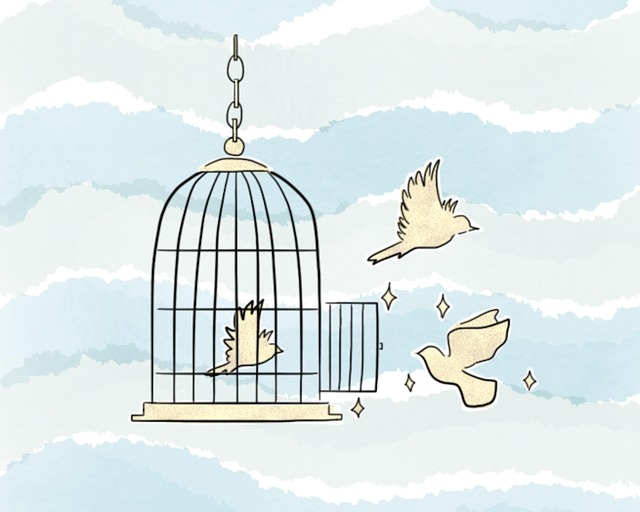
I’ve recently developed a deep interest in the parable of the bird flying free from its golden cage. For many of us, our addictions and dysfunctional behaviors become our comfort zones. This was my issue with the labels I accepted and wore as part of my identity at university—labels that define us to others and place us into specific groups. I embraced the neurodiversity label, proudly identifying with other vibrant, colourful students. “Hey, I’ve got ADHD and dyslexia, with a bit of autism thrown in; I wanna be in your gang.” And so, I became part of the gang. I may have even projected the image of being a bit of a Gary Glitter, trying to fit in with the younger neurodiverse crowd. However, I now realise that I created my own cage; this cage had layers—some I built by myself, while others were formed by experiences beyond my control.
We often settle into what we perceive as comfort and acceptance. Our traits, addictions, anger, and self-denial can stifle our human spirit. The fear of the unknown binds us, preventing us from discovering how it feels to be our true selves and to navigate our own journeys. Holding onto those labels and being part of constricting groups with rules and regulations about how we should behave creates the layers of the cage. We fly out, only to fly back in, not knowing what true freedom is.
Before university and my neurodiagnosis, I was very fortunate, having traveled and lived in beautiful, exotic places. I bought, redeveloped, and transformed homes and gardens. I even built a beautiful spiritual retreat center in the mountains of northern Thailand with the local indigenous Hill Tribe people. I consider myself a creative genius, yet I’ve never managed to stick with anything long enough to benefit from my hard work, often walking away and letting it all go to someone else. My initial plan was to form positive relationships, always aiming to build an oasis for a utopian new world where everyone could live happily ever after. Yet, none of it ever stuck; it all fell apart. Understanding my neurodiagnosis helped me realize why so many negative experiences happened in my past. But discovering why I sabotaged things only spiraled me into more trauma and severe dysfunction.
In the past few years, especially since my time at university and my neurodivergent diagnosis—I have struggled to create anything with roots that could grow into something tangible. I’ve drifted from one rented room to another, couch-surfing with friends. One friend even described me as a drifter, which didn’t sit well with me, but it has become true. I have been drifting since the day I realised I was neurodivergent, trying to figure out who this person really is.
I entered university at the grand age of fifty-seven with a clear purpose: to write a book about my five years in a Buddhist cult in Thailand. This is why I enrolled in a creative writing course, but that book never came to fruition. For it to happen, I needed someone to take an interest in my experience, my story, but no one ever did. You might see where this is going, am I looking for someone to blame? Was it the lecturers, the system? I believe the university system is flawed, and many lecturers exhibited strange behaviours I found difficult to appreciate, especially since I was borrowing a lot of money to help achieve my goal of writing my book. Looking back, it was a mix of that and my own choices that led me down intellectual tangents, fostering genuine curiosity about my newly discovered academic intelligence while trying to meet the obligations of the university system. Ironically, it was the system that eventually broke my passion for writing and learning. “Curiosity killed the cat”. that was another thing they always went on about the cliché, don’t use cliches, I have learnt now to say it how it is and if its someone else’s old worn-out words then so be it.
I should have abandoned the academic labyrinth in my first year once I grasped the university system, but I pressed on. That stubbornness is one of my negative traits of my neurodivergent mind, not knowing when to let go or say no. I even transferred from one university to another, still searching for that perfect place to write my story but only remaining in my cage and finding more control and regulation. This was the time of the pandemic, but you know what i don’t blame the pandemic. I never obtained the degree after completing four full years; I only came away with a £94,000 loan to repay.
But you know what? Time is a healer. Practice patience, understand the trauma and its roots, and you will find the answers you’ve been looking for. I’m in the process of a major overhaul of what my life has been about and correcting the issues I’ve just written about. This blog is about becoming a writer; the books will follow. I’m creating the time and space to do something different. Einstein’s famous quote, “Insanity is doing the same thing over and over again and expecting different results,” got me thinking about how I’ve been approaching things in the past. Did you know there is no evidence that Einstein ever wrote that quote? Apparently, it came from the A.A. and 12-step recovery programs. It makes more sense to me now; it’s all about discovering the truth about yourself and breaking free from that cage.
They’re talking about the world entering a new consciousness,
A new era of peace and harmony.
The Age of Aquarius is upon us,
However, for this to happen and become reality,
We, as the human species, need to grow and develop,
Healing our past traumas, becoming whole,
Then we can be reborn into this new earth.
It is true that writing is one of the best forms of healing. Getting thoughts out of your head and into the wider world allows you to share your experiences. It’s about overcoming the obstacle of fear and confidence, worrying that others may not be interested or may be judgmental about what you are writing.
I was fortunate to receive guidance while training as a Buddhist meditation teacher from the Abbot of the Temple. He told me, “When you succeed in becoming a meditation teacher, there’s something you should always remember from my teaching. If a hundred people turn up for your meditation class, that’s phenomenal—you have celebrity status. If seven people come, that’s good, too, because you can focus on each student and give personal advice and guidance, which will be very well received. But what happens when no one shows up? I like this class the best he said, because you can sit and meditate in peace and quiet without any distraction from the students.”
You can relate this to writing as long as you can read what you’ve written and find some solace in it, then it’s doing its job. You don’t need likes and followers if your aim is to offload thoughts from your head and use expressive writing to improve your psychological health. I use AI for editing, and as someone with dyslexia and ADD, it’s a lifesaver. It gives me the confidence to share my writing with the wider world, whoever wants to read it. Most importantly, it’s a way for me to explain myself; letting people read about me is much easier than trying to verbally articulate who I am.
Writing can be a powerful tool for healing, self-discovery, and connection. It allows you to process experiences, confront fears, and find clarity. Embracing both the solitude and the sharing of your writing journey can lead to profound personal growth.
Be open, be vulnerable, be In Control and on your way to greatness, you may fall, but like the Phoenix rising from the ashes you shall rise again.
Before you embark on a journey of self-discovery, uncovering the past traumas that have shaped the person you are, as opposed to the person you might have become, be careful not to unearth aspects of your life that could trigger emotional turmoil and anxiety in the present day. This journey has taken me more than twenty years to unravel, but it has been in the last two years that I have dug the deepest to find the keys to those dark rooms that hold the secrets of my past.
Gabor Maté describes this process in his book Scattered Minds in neurophysiological terms; my prefrontal cortex never allowed me to access this emotional history. The process of discovering what I have uncovered in the last year was always there. I look back now and think, “Why didn’t I explore this years ago?” My subconscious mind was protecting me from painful emotions I was not ready to re-experience on a conscious level.
I like the idea that this is also a form of spiritual protection from guardian protectors, which some might call angels, ancestors from the past looking over me and guiding me on through this journey of self-discovery.
In the grand scheme of things, it took someone like Gabor Maté until his fifties to delve into his dark past, even though he was a psychologist. For the rest of us, it can be a perilous journey to embark on. If you’re unsure how a journey like this may affect you, have a professional backup ready to help with any emotional trauma that may resurface.
This is something I should have had in past episodes of my life when I got into hot water that burnt my emotional state, but I have a history of not doing what is right. Many times, I have come out of situations where trauma has developed into PTSD, and I’ve always managed by myself. I don’t recommend this path of self-healing to others but if you decide this is the path to take, I hope my experience can help in some way. Always be careful when confronting past trauma.
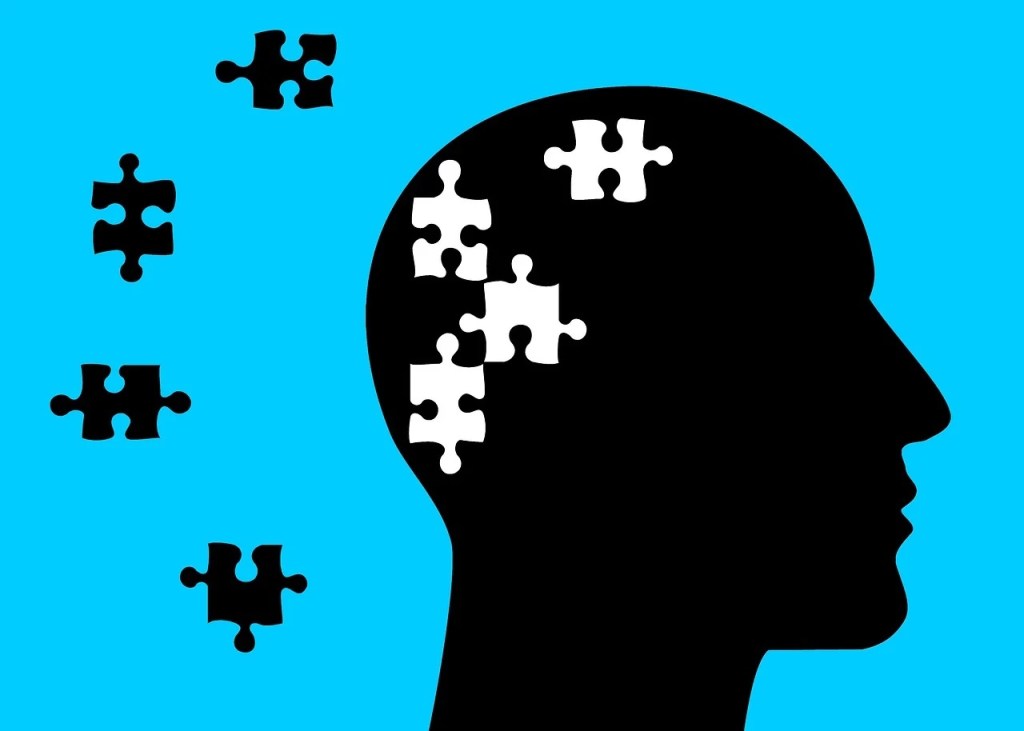
I relate my life as a jigsaw puzzle. The jigsaw puzzle represents the emotional complexity that comes with trauma. Each piece evokes different feelings and assembling them requires me to navigate through my various emotional landscapes.
My mum left me with some interesting pieces that I have kept in the box, ready for the day when I feel brave enough to put the picture together. There are pieces that stand out: one has “nursery” on it, another has “court case,” and words like “whore” and “prostitute.” There’s also one with “daddy’s name,” and the most prominent one says, “We have to forget that dad; you have a new one now, so never talk about him again.” There is a picture on that piece of me sitting on her knee as she whispers in my ear.
These pieces of the jigsaw relate to three important links in my story. My mum told me she had to put me in a nursery at a very young age dropping me off at 7am in the morning and picking me up at 5pm when she finished work, but we had each other at the weekend. I’m talking about being months old, not years. The reason for this was that she took my alleged “father no name” to the National Assistance Board to try to gain some financial assistance. As a single mother, she had little or no chance of getting any help. In fact, the stigma from her daring to stand up and do what she did would have brought more financial devastation to her suffering. The gossip and shame in small communities back then spread like wildfire.
It was a devastating action she took, as it resulted in her being called a “whore” and “prostitute” by the overseeing panel. This ordeal was made more painful as she had to take me to the tribunal hearing, and “father no names” wife showed up with two more babies not much older than me. The same woman turned up at my nan’s door another day with those two babies screaming at my mum to stay away from her husband. It was a proper shit storm and I’m witnessing all of it.
His name is on one of those jigsaw pieces, this one a proper golden nugget “Luby” she went as far as telling me it was a special spelling of the name that I could find in the book Angela’sAshes by Frank McCourt. And there is the piece that has a prison on it. I’ve found his name in articles in the Liverpool Echo (1960 – 1964) relating to his violent history, that he was prosecuted for and went to prison. By all accounts he was an angry man you didn’t mess with. And there is the very sad piece when she locks his memory away, the day she tells me I must forget that man as I’m getting a new dad and we should never talk about him or see him again. I have a vivid memory of that conversation sitting on her knee in my nan’s parlour, I can still feel the fabric of the settee; I was three and half years old.
As I get through this and find solace in what I’m accepting as the truth, there has to be a day when you just accept this is how it is, I’m becoming lighter and feeling freer to go forward and be the person I want to be. I don’t want those dark dank memories to linger and fester more and more each year as I get older eating away at me, because you know why that is, because it wasn’t my fault; I had no control over those times that created the person I became. But I have control now to make a change for the better.
We need to start at the beginning of me. I arrived in this world at approximately 9:15 AM on Thursday morning, January 18th—an intrepid, courageous little thing entering a landscape marked by division and chaos. “A bastard born into a bastard world,” sums up my introduction to the outside world. It was a cold, miserable day when my mother squeezed me into the harsh reality of life.
My birth certificate bears the name Kenneth Oswald Calland, with my mother listed as Elsie Margarete Calland. But my father’s name? Blank. “Father: No Name” was the first cry of my existence, a haunting echo that has followed me throughout my life.
Some say that as babies, we see and hear everything. Our souls remain intact from a previous life; some even remember the moment of conception. Spooky, isn’t it?
It’s All in the Name
The Name, The Name, The Name—if I repeat that enough times, it loses its meaning. What is the name?
Get ready for this one—it can get confusing. I’ve legally changed my name through deed poll three times. The first time was when I was eighteen and needed a passport. I realised my name hadn’t been changed after my stepdad adopted me, so I became Kenneth Oswald Baker, known as Kenny Baker. I wasn’t truly a Baker; I never bonded with the Baker family. I felt like an anomaly, a blip that didn’t fit in. They were always polite, but I wasn’t one of them. At family gatherings, I felt uncomfortable way back then never really went to any Baker gatherings, there were lots of Calland get togethers for all types of occasions, it was a proper party tribe, but i always felt like the little black sheep, bleating and getting drunk. Alcohol was my perfect friend and soother.
I got on with it and it all seemed fine until I got to my mid forties and became curious about the origins of my name, coinciding with my interest in my biological father. I asked my mum where my names came from, especially Kenneth—why did you call me Kenneth? Her response was bewildering: it was fashionable at the time of my birth. And Oswald? That was an uncle who died down on the docks just before I was born.
I was never comfortable with the name Kenneth—or Kenny, as I was known. It didn’t fit; it wasn’t me. So when my stepdad passed away, I decided to change my name back to Calland. I wasn’t a Baker—no bloodline or DNA connected me to them—and I sought balance and understanding of who I was. In the process, I made Oswald my first name and abbreviated it to Oszey. I wanted to drop Kenneth entirely, as it held no significance, being named after some fashionable celebrities from the late ’50s and ’60s.
To my surprise, my mum got very upset about my desire to drop Kenneth, Kenny . She made me promise to keep it as my second name, saying I would always be her Kenny. So, I became Oszey Kenny Calland.
During this time, I grew more curious about my biological father. I eventually connected with someone who knew “Father No Name’s” family and got to meet his sister, my auntie. I discovered though this brief but informative meeting that I was named after my ‘father no names’ deceased brother, Kenneth Luby, who died at eighteen in 1945, fighting for the British army. He’s buried in Allerton Cemetery, where many of my mum’s relatives rest. Spooky. I also got a lot more insight and information on the relationship that my mother and father had and how it affected both families and the distress they caused by their relationship, creating me in the process.
This period was intense as I sought to uncover my roots while caring for my mum, who was dying of a terminal illness. I hoped she would open up and reveal the full story, but she only shared little gold nuggets, taking the unresolved fragmented story of my life to the grave. My psychological state took a battering during this time—juggling being a full-time carer, trying to discover who my true father was and why there was such a shadow history to it all. And then grieving the loss of my mum, the now-missing link holding the keys to my past. I became an emotional rollercoaster becoming the hard man with no emotion just a will to survive and move on. Six months after my mum passed away, I found myself living in Thailand—“the great escape.” More on that later.
Everything went quiet after that in my search for Kenny; I simply became Oszey, never using Kenny again. It was eleven years after my mum’s death while at university in Cheltenham that a good friend, Mary, offered me a chance to live in her cottage in Sligo, Ireland, for a couple of months. It was there that another name change began to emerge. I was in an isolated location perfect for meditation and reflection when I met Jeanie, a lady living in the end cottage, who was into genealogy. Jeanie opened the doors of inquiry putting the light back on to help me see who I was.
I discovered that the name Calland originates from Ireland; my mum’s family were Irish—a fact never discussed in the Calland family. By Jeanie’s reckoning, I had Calland family history in Roscommon, ten miles from where I stayed, and ‘father no names’ family connections ten miles the other way in Sligo.
Through extensive meditation and inner exploration, I decided to create a new name for myself, letting the old one go. After researching the psychological effects of names, Sonna Aronaran was birthed—the Happy Loner. With no family left, all ghosted, it felt perfect for me.
I recently discovered that the name Oswald comes from my Grandad, John Oswald Calland—a man my mum physically and mentally fought with, especially when he came home drunk from the pub. She would carry me from where I was sleeping and run out the other door to my aunt’s house on the next street. I believe her when she told me she fought with him, taking punches and punching back, but he never laid a finger on me. My Grandad was the only man I loved; I cried at his funeral.
“No one needs to take the blame, as the blame comes from the guilt and the shame”.
That last post broke the insecurity mold, and I’m now running freely in the field, skipping through the daisies. This blog, as mentioned, is about me and my quest to find out who I am in this world. With that in mind, I’m not delving into present-day relationships with siblings, relatives, or past partners. There’s no need to poke around looking for past drama or to blame anyone for my chaotic existence or for not telling me the truth about who I am.
From what I have recently discovered about my dark early days, most people close to me might not have known the deep, hidden secrets that were locked away so many years ago. This blog will focus on my relationship with my father and mother—the ancestors whose blood and DNA contributed to who I am.
I’m delving deep into my neurodiversity, exploring the traits and disorders that unknowingly influenced my relationships. Those odd behaviors I had, which I didn’t see but others did and judged me for, are now coming to light. I thought I was the “normal” one, always wanting to be right, but looking back, I realize that many things about me were wrong.
I’ve come up with a descriptive phrase for myself: “simply complicated.” In reflecting on my life, that phrase couldn’t be more apt.
Now, let’s squeeze the juice from the lemon: what set all of this in motion? From what I am uncovering, it all stems from the situation surrounding my arrival in this world—the chaos and mayhem that ensued from my conception. For a long time, I had to refer to my father as “Father No Name,” since his name is not on my birth certificate. He was present during those early years; I know that, even though I can’t remember him. The images of him and his voice are locked away in the trauma room.
However, I am going to reveal him. I’ve uncovered a lot of information that proves he is my father, and I’m moving forward with that evidence. Some people might take umbrage with my decision to disclose this information, but that’s tough, isn’t it? This is my story—my life—that has taken sixty-four years to piece together, so what needs to be said will be said.
“Umbrage”—a fancy word from a skinny, rough scouse kid who didn’t go to school much. And that’s something I’m discovering: I come from a background of highly educated people. There’s much more to come about epigenetics and how this has shaped my development.
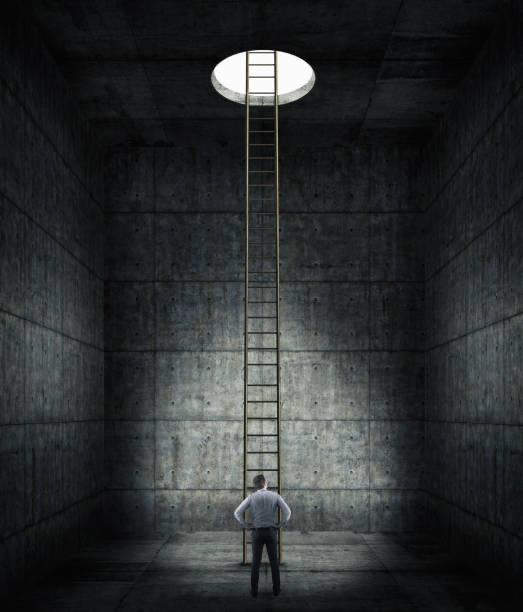
So many things can go wrong going up that ladder. Fear is are greatest challenge.
Here’s something interesting about confidence and ability—well, I’ve found it interesting. I have had a block regarding my ability to publish a blog, and it’s been due to that first picture I put up on the first post—the very biblical one, “Finding The Truth.” It’s weird because I created it with AI and was never comfortable with the image. So why have I not simply deleted it??? I kept telling myself, convincing myself it was there for a reason, nothing to do with the Bible, and that there was significance in the symbolism of the moons and people.
Looking closely now at the image, it’s making sense, as this blog is about going back and finding the roots of my existence—where I truly come from, my Celtic, Druid DNA. What I have been going through is known as “creative anxiety,” where that fear and self-judgment have caused paralysis, procrastination, and a lot of self-doubt, resulting in a fear of exposure. It’s that fear of writing about personal experiences. And those personal experiences will be the core subject of the blog—a gateway to completing my book that’s been on the back burner for the last five years.
I’m working on separating creation from judgment, getting over the imposter syndrome, and allowing myself to be vulnerable and more open. This feels better already—being able to explain myself. Self-articulation has always been a problem for me; the ideas, thoughts, and feelings are locked up in my head, and the key has always been a problem when it comes to unlocking and expressing what I want to say. Just writing this blog, I can feel something has shifted. I’m on the move, riding through the fear. It’s all going to be okay; I’m jumping the hurdles and winning the race.
For me in the present moment i want to reduce the clutter in my mind. I’m currently traveling and staying at the Roots Institute for Wisdom in Bodhgaya, Northern India. It’s been a long time since I’ve been in a monastic environment surrounded by Buddhist monks and nuns. This setting promotes Dharma teachings and mindfulness, and at the moment, there are respected Lama Rinpoches offering informative teachings on the Middle Way to freedom.
I didn’t plan to be here at this time, but it seems to be the perfect place to uncover how messy my mind has become and to navigate the chaotic thoughts swirling around in there. This is the perfect place for reflection. I initially intended to stay for just a few days, but I’ve decided to extend my visit to three weeks to see if I can declutter my thought process and settle into a more organized mind. I hope to establish a routine for my writing.
I’ve been here for a week, but I allowed myself to get distracted from focused writing by attending teachings from the Lamas. Unfortunately, I’ve caught a miserable cold, coughing and sniffling all over my laptop. Despite this, I’ve started to write and find some sense of order. The order is simply that I want to write; I feel compelled to get the words out, and something seems to be clicking into place. The distraction turned out to be a positive one, as it allowed me to connect with compassion and deepen my understanding of what I’m trying to convey in my writing. This blog can serve as a resource for others who may have similar trauma-related issues that have contributed to a neurodiverse mindset. In compassion, we can find forgiveness. The best way to cultivate compassion is through meditation. Reflection from a third-person perspective, often referred to as the higher self, can also be beneficial. When we allow ourselves to slow down and create an inner environment for stillness to arise, things become clearer.
The third-person perspective—our higher self—offers a balanced view that can lead to a transformative understanding of how past negative events have affected our current experiences. Identifying the root causes of trauma, particularly if it was inflicted during infancy, can be challenging. Deep-seated negative experiences may be difficult to access, but approaching them with compassion can facilitate healing.
Welcome to WordPress! This is your first post. Edit or delete it to take the first step in your blogging journey.
Discovering The Truth !
Growing older, becoming wiser, and worrying less about how people perceive me—or how they see me. I’m learning the secret of who I am, breaking through the unconscious silence that has kept me from seeing myself clearly. Why can it take so long to discover our true identity? Why do we suffer in the pursuit of truth? Why is life painful? This blog is a search for answers to those questions—a journey through the experiences, histories and hidden influences that shape who we become. I’ll explore DNA and epigenetics, and how our inheritance and environment may influence our behaviour, the lives we choose, and the direction of our spiritual journey. As I search for answers, I hope to understand not only where I come from, but who I am becoming